In late 2025, Cyclone Ditwah swept across Sri Lanka, leaving a trail of destruction from the highlands to the southern coast. Roads were washed out, bridges collapsed, hospitals were overwhelmed, and countless communities struggled to maintain basic services. For many Montanans, it’s hard to imagine a storm of that scale—but for the people of Sri Lanka, recovery has been urgent and ongoing.
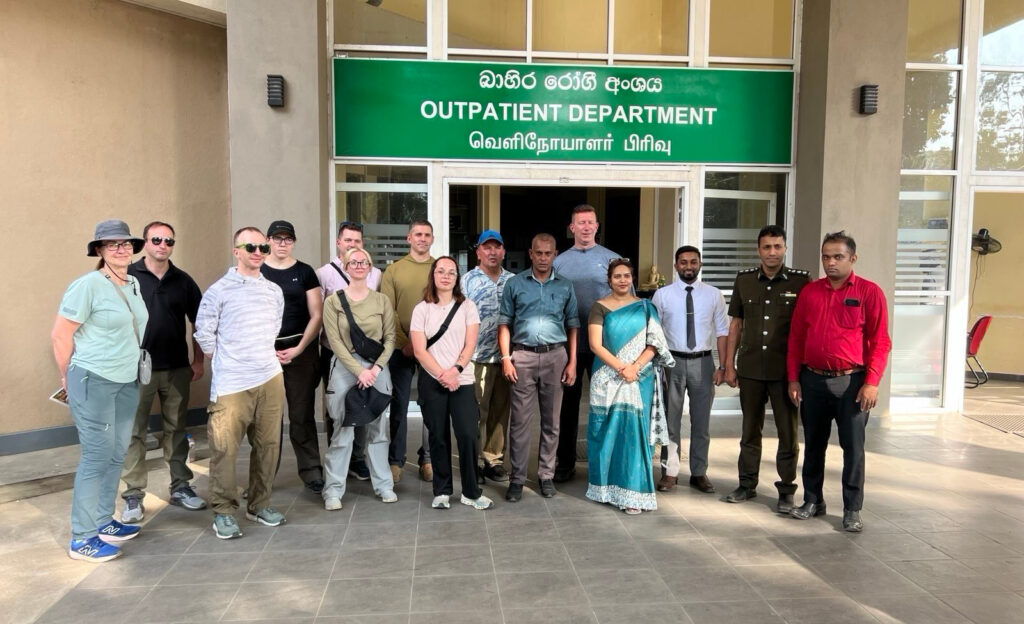
This past week, the Montana National Guard returned a team of engineers, medical professionals, and disaster management experts to support recovery efforts. Their mission was clear: assess needs, share expertise, and strengthen systems for both near-term relief and long-term resilience.
“Montanans understand what it means to come together in times of crisis,” said Brig. Gen. Trent Gibson, Adjutant General of the Montana National Guard. “Our Soldiers and Airmen bring proven expertise in disaster response and recovery, but they also bring the compassion and care that defines our state. We are proud to stand with the people of Sri Lanka as partners and as friends.”
The Montana team’s work focused on three pillars of assessment: medical facilities, infrastructure, and disaster management systems. In the Nuwara Eliya region, medical personnel—including Lt. Col. Kory Nordlund, Maj. Lance Griffin, and Lt. Col. Mary Anderson—visited 15 hospitals, clinics, and shelters. They evaluated staffing, equipment, and resource gaps, noting issues such as limited access to clean water, damaged CT scanners, and shelters without adequate blankets or coats for families in higher-elevation areas. In one instance, the team purchased blankets and coats locally to keep shelter residents warm—a small act reflecting a mission centered on people, not just processes.
Simultaneously, engineers from the 219th RED HORSE Squadron, led by Lt. Col. Kevin Ochs and Senior Master Sgt. Nicholas Hackett, surveyed 26 critical infrastructure projects in the Kandy and Matale regions. Roads, bridges, schools, and public buildings were evaluated to prioritize recovery projects that restore access, safety, and community resilience. “In rural areas especially, access is everything,” Ochs said. “If roads and bridges aren’t passable, recovery slows to a crawl.”
Disaster management specialists rounded out the team’s efforts by coordinating with national and local leaders, helping strengthen preparedness planning and communication systems. Their work emphasized the importance of rehearsed protocols, cross-agency coordination, and involving non-government partners in recovery efforts.
“This mission is not one-directional,” said Lt. Col. Noah Genger, delegation lead. “We shared Montana’s experience responding to floods, landslides, and wildfires—but we also learned from Sri Lanka, a country that has navigated the impacts of a nationwide disaster. That perspective will make us sharper at home as well.”
Indeed, Montana’s own recent flooding and landslides in the northwest, while smaller in scale, underscored the value of this exchange. Lessons in coordination, resilience, and systems thinking gained in Sri Lanka are being directly applied to improve Montana National Guard preparedness and emergency planning.
The mission was part of the State Partnership Program (SPP), a long-standing Department of Defense initiative that pairs U.S. states with partner nations to foster durable relationships. Prior exercises such as ATLAS ANGEL 2024 and PACIFIC ANGEL 2025 had already built trust and interoperability, allowing Montana teams to work seamlessly alongside Sri Lankan counterparts.
“The State Partnership Program embodies collaboration at its best,” Gibson said. “By training and serving together, we improve the ability of both nations to respond to crises. These partnerships make us stronger at home and abroad, and they demonstrate America’s enduring commitment to stand with communities in need. We are not only helping communities rebuild, we are reinforcing friendships forged through years of trust and shared service. That is the Montana way.”
The Montana team’s work culminated in a briefing to the Disaster Management Centre, Sri Lanka’s equivalent of FEMA, and to the U.S. Embassy in Colombo. Their findings now form a foundation for actionable recommendations, guiding both immediate support and long-term planning for recovery.
Through the assessments, the Montana National Guard demonstrated a philosophy of service that combines expertise with empathy. Medical gaps identified in clinics, critical infrastructure challenges revealed by engineers, and systemic vulnerabilities observed in disaster planning all feed into a shared objective: strengthening resilience for Sri Lanka while sharpening Montana’s own response capabilities.
Amid the data and recommendations, one lesson stands out. Beyond infrastructure and planning, recovery is human, relational, and reciprocal. Listening to exhausted but determined Sri Lankan officials, walking alongside families in shelters, and witnessing communities begin to rebuild left a lasting impression on Montana’s Soldiers and Airmen.
“Resilience isn’t just a system; it’s a choice people make every day,” Genger reflected. “Watching Sri Lankans recover with hope and determination reminded us why service matters—both here and back home in Montana.”