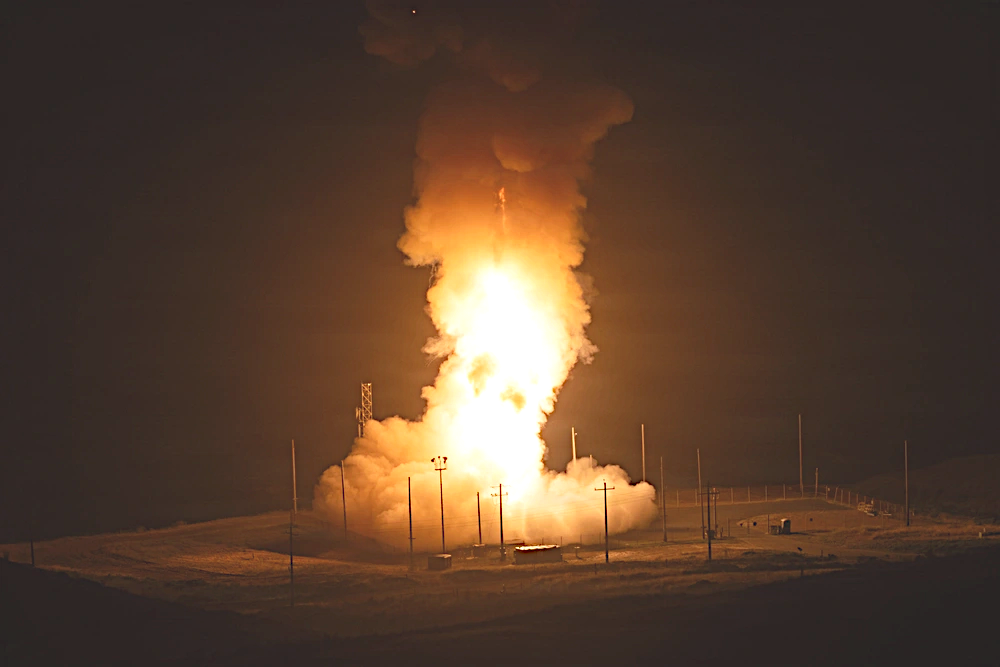
On May 20th at precisely 12:01 a.m. Pacific Time, the Air Force Global Strike Command executed a test launch of an unarmed Minuteman III intercontinental ballistic missile (ICBM) from Vandenberg Space Force Base in California. This particular launch, designated GT 256, was planned several years in advance and serves as an essential component of routine operations, designed to provide a comprehensive assessment of both the missile system’s capabilities and the personnel responsible for its maintenance and management in a meticulously controlled testing environment.
“Our ability to conduct these rigorous, realistic tests is foundational to our national security,” said Gen. S.L. Davis, commander of Air Force Global Strike Command. “This launch verifies the health and readiness of our ICBM force, confirming the capability of every component of the ICBM enterprise, from our operators to the weapon system itself, to execute the mission.”
Throughout the test, highly trained engineers meticulously tracked the missile’s flight path, collecting valuable data to evaluate the performance characteristics of its propulsion, guidance, and reentry systems as they endured extreme physical conditions experienced during flight.
The test launch serves multiple purposes; not only does it assess the entire ICBM mission suite, but it also provides valuable data to various government agencies involved in national defense. This includes critical information from a complete end-to-end systems check, which is rapidly shared with the Department of Defense, the Department of Energy, and U.S. Strategic Command. This information is crucial for informing sustainment strategies, engineering decisions, and lifecycle analysis of the ICBM systems.
“These operational tests are the most visible and vital way we verify the readiness of our systems,” said Col. Dustin Harmon, 377th Test and Evaluation Group commander. “More importantly, they are a direct reflection of the unmatched skill and dedication of the Airmen in our missile community who ensure this critical mission is a success every single day.”
The test involves extensive cooperation from maintenance and operations crews, who approach the event as a high-fidelity rehearsal of their daily routines.
As the Air Force works toward transitioning to the LGM-35A Sentinel, this continuous cycle of operational testing ensures that the existing land-based leg of the nuclear triad remains safe, reliable, and effective until its successor is fully deployed and operational.

Author: Karen Anderson
Karen is the Editor-in-Chief overseeing all news operations at Foxys Publishing Co. She also loves photography and spending time with her dogs.