During the early stages of mankind, Earth Day was not a one-day celebration. It was part of their everyday culture and spirituality. Living in harmony with nature was essential. So they held harvest festivals and other rituals honoring Mother Earth. Mother Earth deserved their reverence.
During the 13th and 14th centuries, the entire world’s population was growing rapidly. Cities were expanding. Residents were recognizing their air was being fouled. Knowledge was lacking about solutions.
During the 1700s to 1800s, societies became less agrarian and more industrialized. It was the beginning of the Industrial Revolution. This cultural change exacerbated air pollution – coal-burning trains, industrial factories, and electric plants built to power motors and lights. People needed coal and wood stoves for heating and cooking needs. All of these needs created pollutants.
America was the same and became the world’s largest industrial nation. In 1948, Donora, PA, experienced smog that sounded a deadly alarm. It had two factories, zinc and steel mills. This combination created pollutants Hydrogen Fluoride (HS) and Sulfur Dioxide (SO2), as well as other pollutants. Water mixed with HF and SO2 create acids. Unfortunately, Donora’s two factory smog pollutants mixed with fog, creating acids. Twenty deaths and thousands of respiratory (asthma) problems occurred. That situation became the catalyst for our federal Clean Air Act.
Twenty-one years later, in 1969, the United Nations Educational, Scientific and Cultural Organization, UNESCO, held a conference in San Francisco at which time John McConnell, the peace activist, proposed a day to honor Earth and Peace. That date was March 21, 1970, the first day of spring. The event was later sanctioned by the UN Secretary General.
A month later, US Senator Gaylord Nelson, an environmental Democrat from Wisconsin, proposed a nationwide environmental teach-in on April 22, 1970. He hired Denis Hayes, an activist and coordinator. From that point on, it was said “the movement organized itself,” and Earth Day was born.
After 56 years, Earth Day still takes place. There are 17,000 partners and a network of organizations in 174 countries, and millions of people involved. As mankind continues changing the world today, for the good and not so good, it is hoped that Earth Day’s participants continue to grow.
Cities like Great Falls celebrated Earth Day Resolutions in 2016, 17, 18, 21, 22, 23, 24, and 25. Earth-friendly citizen organizations like Citizens for Clean Energy (CCE) and Golden Triangle Resource Council (GTRC) requested those resolutions. In addition, City Commissioners recognized their importance.
This year, GTRC is celebrating “Joyful Earth Day – Giant Springs State Park”. It happens at 8:30 am on April 22 at Heritage Park, where we will meet to plant trees.
This year’s celebration includes Fish Wildlife Park (FWP) employees, AmeriCorps members, Earth-friendly organization members, and more. No registration is necessary; just show up.
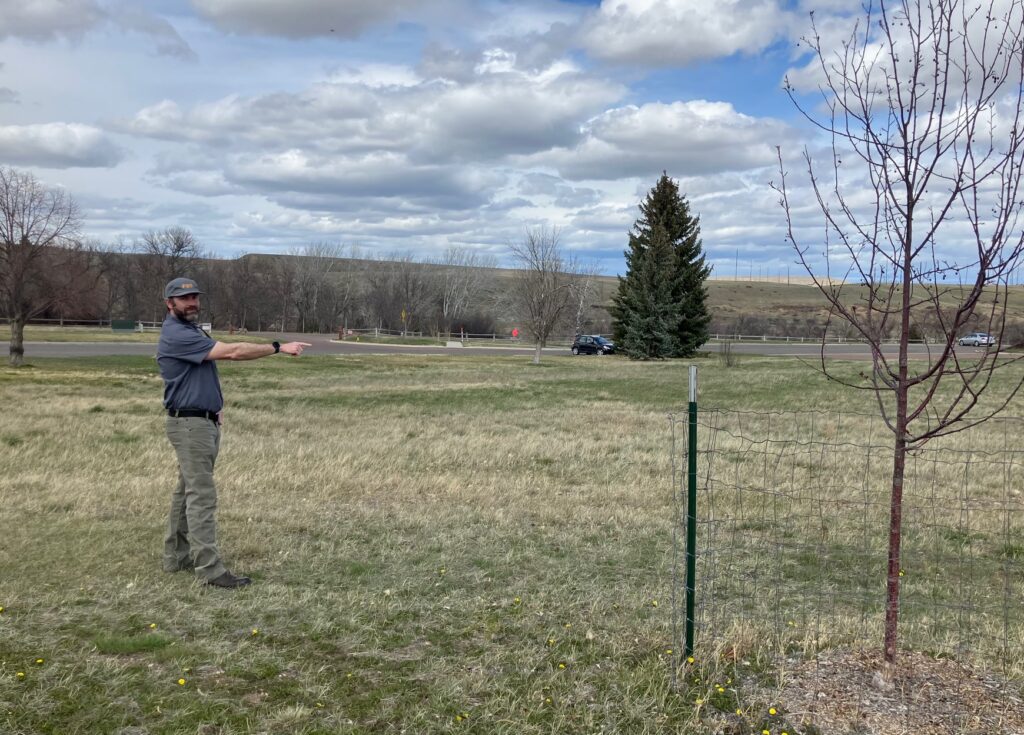
FWP purchased 6 native Montana trees and everything else to protect the trees. The planting will be near the entrance to Heritage Parks.
Be sure to wear proper clothing for the weather, work duds, gloves, and boots. We will plant trees regardless of the weather. Trees don’t care if it’s snowing, raining, windy, hot, or dry. They just want to be planted.
Again, all people are welcome to celebrate this planting. Even your dog, as long as he or she is leashed.
It will be a joyful way to celebrate Earth Day at Giant Springs State Park.
By Karen Thornton & Ron Paulick: April 16, 2026 – Great Falls, Mt