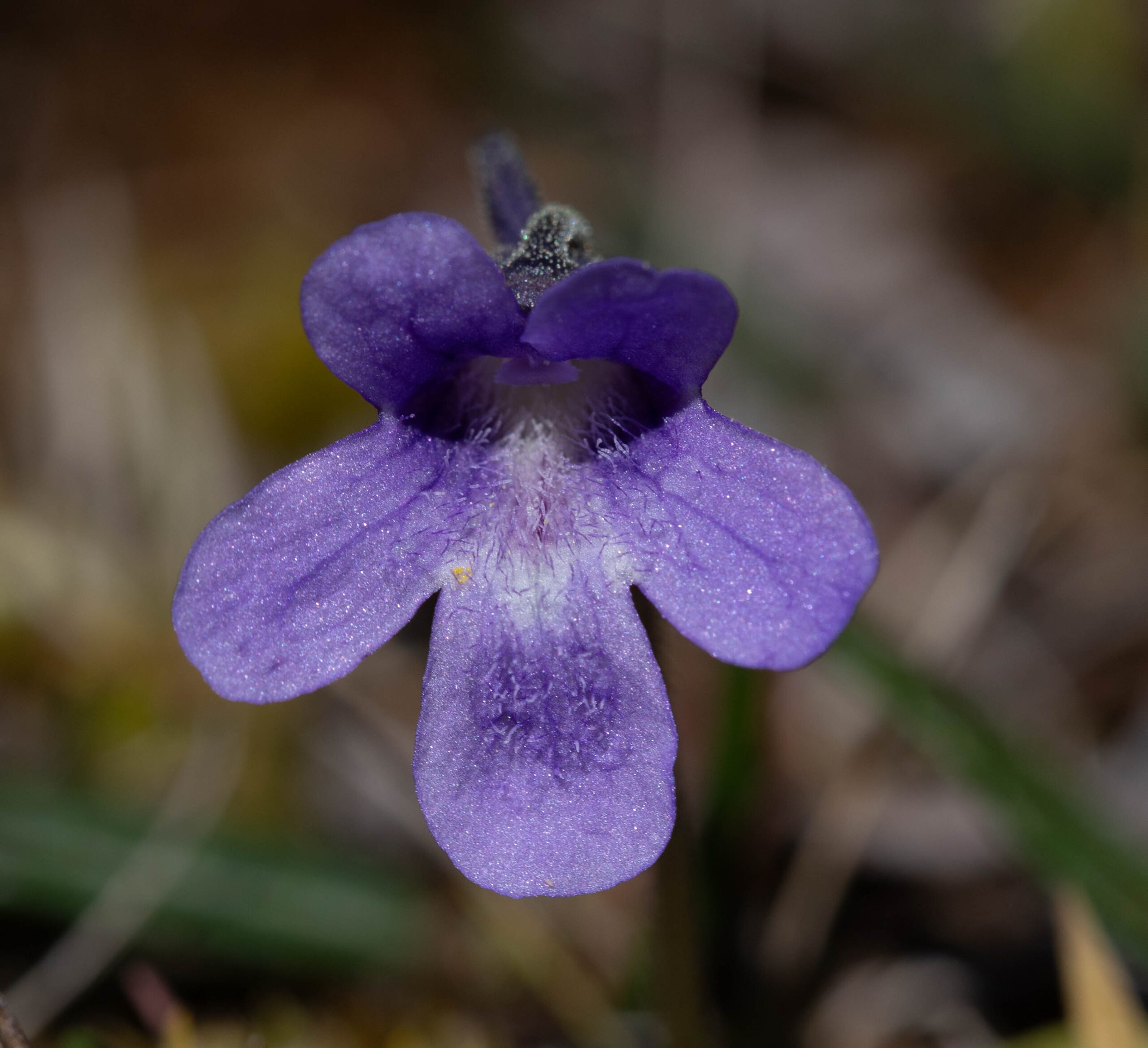
California Butterwort (Pinguicula macroceras)
Bladderwort Family (Lentibulariaceae)
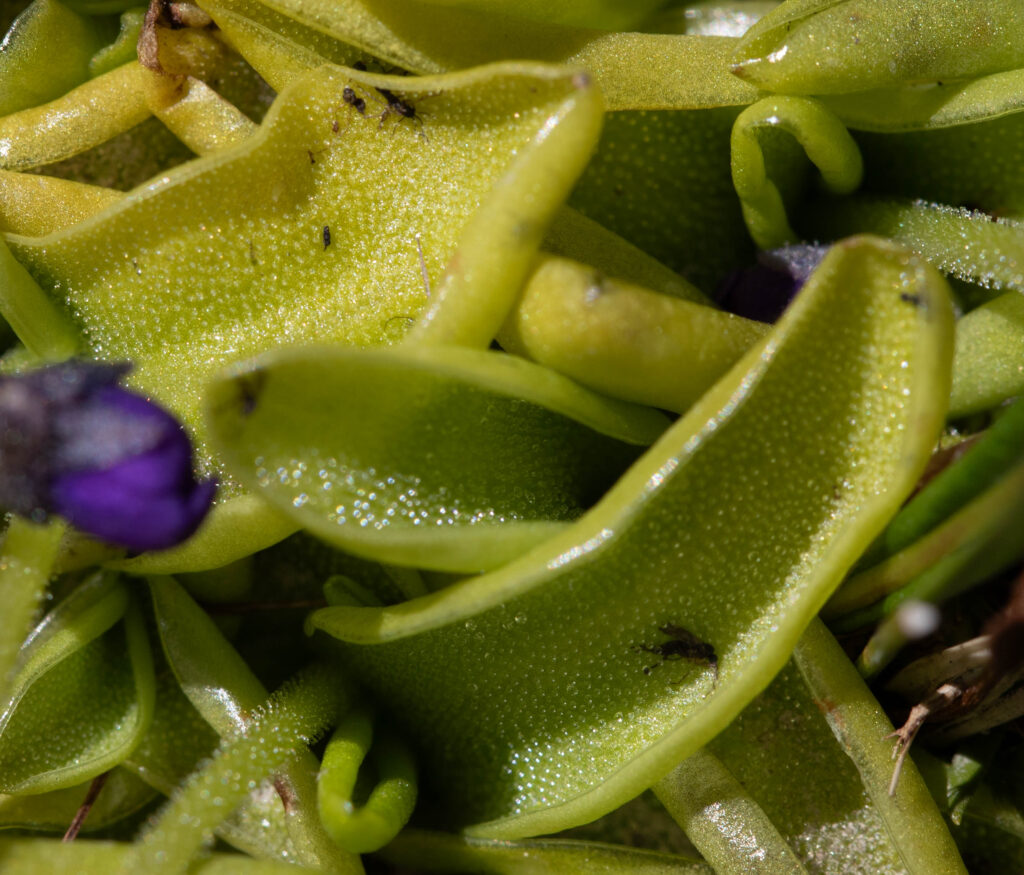
The California bladderwort is a seldom-encountered species unless you know where to look. Despite its name, it has a fairly broad range across the U.S. and Canada. Perhaps the most interesting thing about this species is that it is carnivorous. The places it grows in are nutrient-poor, so it has to make up those nutrients elsewhere, and it does so by trapping small insects on its leaves and then digesting them. The leaves do not really move, like those of the venus’s flytrap do, though. They are covered in glands that produce a sticky mucilage which is really only strong enough to trap smaller insects.

This is a rather small plant, no more than a few inches tall at most. The leaves of the butterwort are all clustered at the base. They are bright, almost fluorescent green, with margins that are slightly rolled in. As mentioned, they are covered in hundreds of glands that produce a sticky substance designed to trap things unlucky enough to blunder onto them. Collectively, they give the upper surface a greasy, almost buttery, look. A single, tubular purple flower arises from each plant on a long stalk, well above the leaves. It was created this way to keep any small pollinators well away from the leaves. It would not do the plant any good to kill the insect that just collected its pollen before it could visit another flower. The flower is bilaterally-symmetric, meaning that if you drew a vertical line down the middle, it would have two even sides. The top half has two lobes, and the bottom has three. A long spur extends behind the flower, which is where the nectar is contained.
California butterwort always grows in wet habitats, such as seeps, fens, and wet cliffs, always in areas with poor soil nutrient content. In some cases, it can be seen growing directly out of the side of vertical rock faces. Within the state of Montana, it has a very limited range. It is presently known from only two counties, in very small pockets. It is primarily a high-elevation species, with most populations occurring above five thousand feet. As such, it usually blooms closer to mid-summer, around the end of June, through the end of July.
This species is rare in Montana, as it has a very limited range and very specific habitat requirements. If you do happen to encounter this plant, please leave it be. It will not transplant well. There are many legitimate retailers out there that sell carnivorous plants if you want to try your hand at cultivating them. It is best to just let it grow and do its thing. Get down next to it, admire it, marvel at it even, because so few people get to see it and recognize it for what it is. It truly is a gem of a native species.

By Buck Fitzhugh: July 22, 2026 – Great Falls, Mt